


Offshore drilling giants Brazil and Norway meet in the Round of 16 of the 2026 World Cup on July 5th. Ahead of that match, here’s a different kind of head-to-head — Brazil and Norway as offshore E&P and drilling powers, not the sides that’ll actually take the pitch on July 5th in East Rutherford, New Jersey.
Norway vs. Brazil – Offshore E&P and Drilling
Norway’s total production (oil and gas) peaked near 5 million boe/day in 2003–2004 and has held near 4 million boe/day in recent years. The mix has shifted toward gas, however: oil production peaked above 3 million bbl/d and held that approximate level from 1995 through 2003 before declining. As of April 2026, Norway is producing ~1.95 million barrels of oil per day, or ~45% of its total hydrocarbon production including gas and NGL’s (Source: Norwegian Offshore Directorate).
Brazil is on a different trajectory. As a younger producing country, it’s still ramping up its most productive pre-salt fields, Búzios and Mero. Brazil surpassed Norway in total annual boe production in 2023, and the trend looks set to continue: Búzios alone will add three FPSOs with 225k bpd of oil capacity each in 2027. All three will likely produce above capacity.

Much of Brazil’s early production came from the Campos Basin and fields such as Marlim, Albacora and Roncador, although the production ramp of recent years is attributable to the pre-salt giant fields in the Santos Basin; Tupi, Búzios and Mero. Tupi has been a highly successful pre-salt field in Brazil’s Santos Basin and held production levels above 1 million barrels per day in 2019-2020. Brazil’s recent production growth strength has been from Mero and Búzios. These three pre-salt giants now comfortably produce over 2 million barrels of oil per day and will at least maintain these levels for years to come, although Brazil’s more mature fields elsewhere (i.e. Campos) will continue to face decline without revitalization investment.

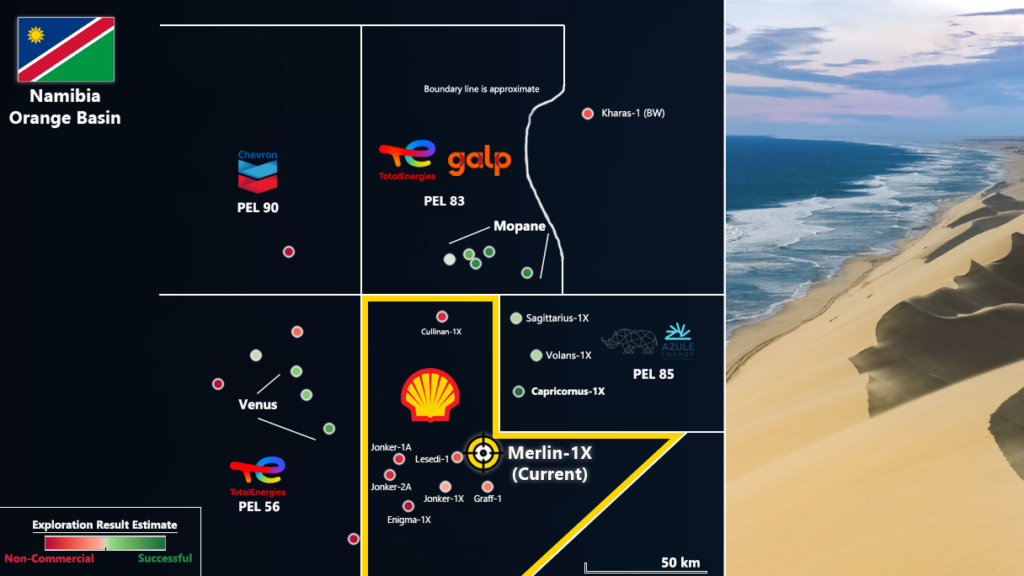
After Búzios delivers its three new 225k bpd FPSO’s in 2027, the Santos Basin has other projects although none are at the scale of Tupi, Búzios and Mero. This is partly why Petrobras has been entering new deepwater exploration blocks in countries such as Colombia, São Tomé and Príncipe, Namibia and Côte d’Ivoire as it seeks potential other sources of oil to offset eventual production declines anticipated in the 2030’s.
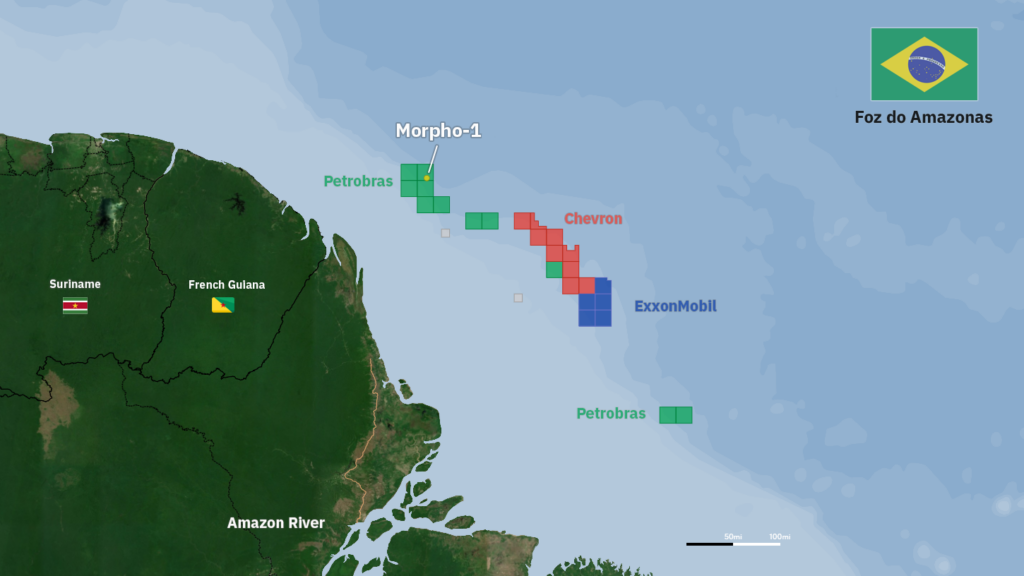
Brazil’s massive size and long Atlantic coastline give it substantial internal running room for further deepwater exploration potential. The Equatorial Margin and Pelotas Basin have considerable potential, while the Santos and Campos Basins still hold targets under active exploration and appraisal — including pre-salt prospects within Campos.

The Norwegian Continental Shelf includes oil and gas production in the North Sea, Norwegian Sea and Barents Sea. As a mature hydrocarbon producing country, Norway has built an impressive infrastructure network to support its various production hubs. Despite its maturity, Norway is actively drilling exploration and appraisal wells, although the majority (~80%) tend to be within tieback distance of existing infrastructure.
While Norway successfully delivered the new 220k bpd Johan Castberg field in the Barents Sea in 2025, the country does not have an apparent, comparable next greenfield project. Norway does very well with brownfield E&P capex which is generally capital-efficient but is more so about maintaining existing production instead of growth. Norway has the Wisting greenfield project in the Barents Sea which appears on track for potential FID in the next 18 months. However, Wisting only projects to be a 125-140k boepd project and is unlikely to match the economic returns of Johan Castberg, whose oil often trades at a $4-$5/bbl premium to Brent.

Norway’s headline discovery in 2025 was AkerBP’s Omega Alfa, with estimated recoverable resources of 96–134 million boe. It’s an impressive discovery, but nowhere near the scale of Brazil’s top pre-salt fields. Instead, its significance lies in efficient brownfield capex as the discovery sits within tieback distance of the Yggdrasil field, allowing existing infrastructure to bring it online in a capital-efficient manner rather than requiring standalone development. It also opens up new exploration targets enabled by technology advancements.
Omega Alfa represented a successful use of technology, with its horizontal well design capturing reservoir data at a high resolution. The Norwegian Continental Shelf is entering a new phase of rising drilling intensity, and E&Ps are embracing technology like this to help maintain, and potentially grow, production.
Artificial intelligence’s role in supporting oil and gas production is still in its early stages, but E&P’s on the Norwegian Continental Shelf have the advantage of decades of accumulated field data. As AI capabilities advance, that legacy dataset could be put to productive use, sharpening drilling decisions and improving well performance. Norway also still has high-impact exploration prospects on the table, including some in tight reservoirs. Technology will play a key role in Norway’s hydrocarbon production future.
Equinor will remain a long-term investor on the Norwegian Continental Shelf for decades to come, but it’s notable the ~67% state-owned major has also been building a position in Brazil’s Santos Basin in recent years. Its Bacalhau field reached first oil in late 2025 via a 220k boepd FPSO, and Equinor’s next project, Raia, is targeting first hydrocarbons (including meaningful gas) in 2028, also from a 220k boepd FPSO. Equinor holds nearby blocks close to bp’s 2025 Bumerangue discovery that remain unexplored, representing a further potential growth area, though that will depend on results from bp’s upcoming exploration and appraisal campaign in 2026–2027.

Summary
Brazil is an offshore E&P force with massive pre-salt fields that will be contributing to significant growth in 2026-2027 with strong economic returns due to impressive well performance. Norway is the veteran offshore producer that lacks the impressive growth it had during its prime producing years but makes up for it with capital efficient, infrastructure-led investment to maintain production levels. While both Brazil and Norway utilize technology to support their operations, Norway appears to be placing a higher importance on it as its critical to its long-term E&P trajectory.
While Brazil is the clear favorite on the E&P side — led by the current strength of Búzios and Mero — Norway is arguably the more favorable market for drilling rigs. Higher-spec semisubmersibles built for harsh-environment conditions are increasingly relied upon by E&P’s, as drilling intensity needs continue to rise.
If the Brazilian and Norwegian offshore drilling industries met on a football pitch, Brazil would go in as the favorite. Brazil is the youth side, fielding its top pre-salt assets in their prime scoring years. Norway is the veteran squad: past its peak, but it has aged well and still has a few tricks up its sleeve. Play the match 10 times, and Brazil likely wins the majority of times, but I’d give Norway the upset in 3 of those 10. Good luck to both.


Comments (0)
Log in to leave a comment
Sign in